Condition
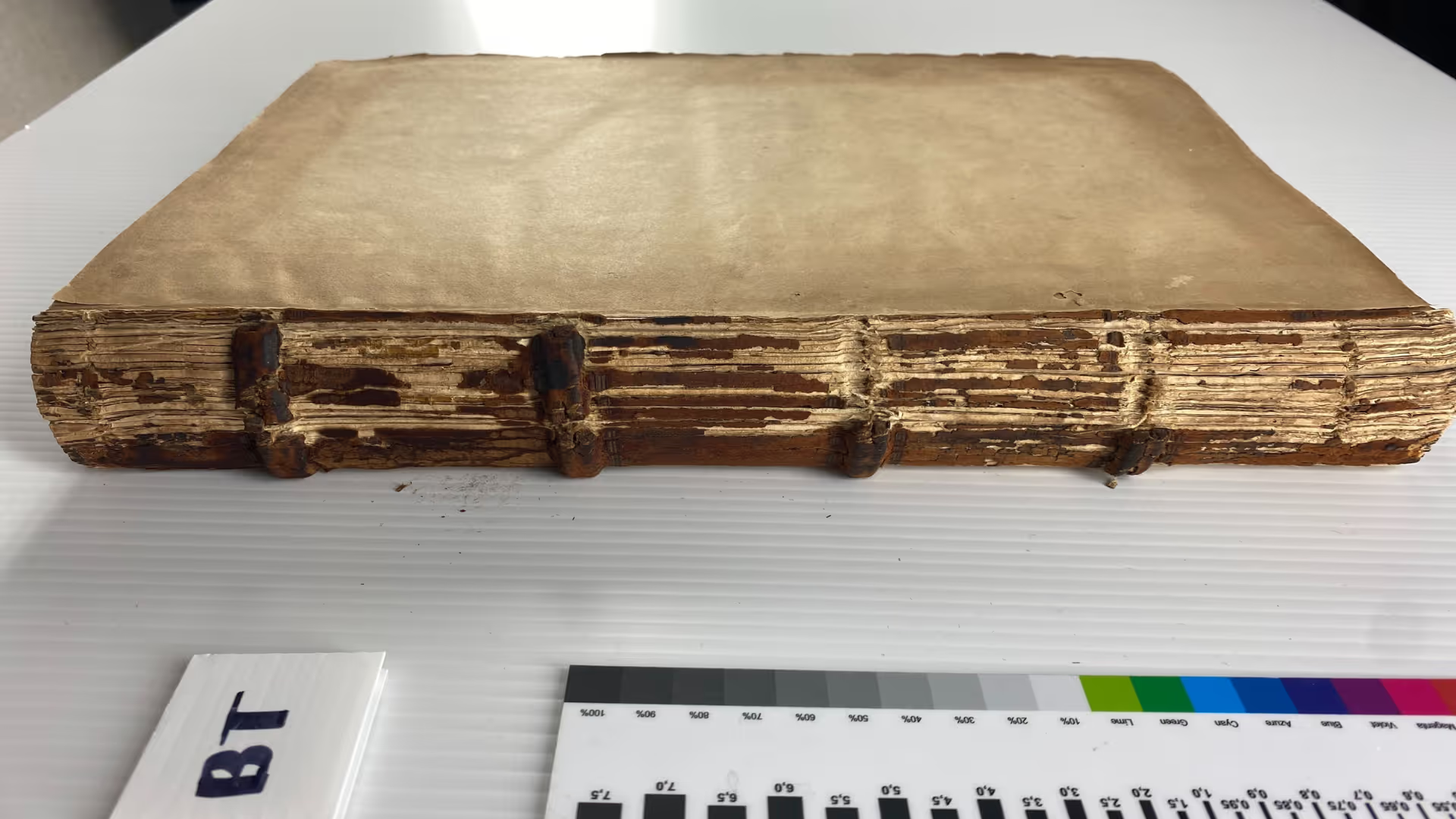
- The hardbound volume of 278 pages of handmade laid paper was in very poor condition, making this a significant treatment in terms of complexity, size and fragility.
- The covers and spine were partially missing. Throughout the text block there were many tears, losses, discolouration, stains, embrittlement of the paper, as well as many pages that were soft and pulpy due to mould damage.
Treatment
- The decision was made to “pull the book down”. That means undoing the original binding and sewing to separate every page.
- Each text block was made up of 6 folded, double pages, with all sections sewn together along the spine. The linen threads were removed, and the book was washed page by page, section by section over several weeks to clean the paper and reduce acidity and discolouration.
- During this process it was discovered that some page numbers had been incorrectly printed, with a doubling up of some. There were also several blank, unnumbered pages at front and back. The entire book was repaginated using a soft graphite pencil markings (removed after treatment).
- Every double page was opened out and interleaved with support sheeting to ensure safe handling during wet treatment, then flattened between blotters in the book press in preparation for tear and hole repairs.
- Japanese tissue and reversible starch paste were used to repair over 400 damaged stitching stations and fold lines, along with and many smaller tears and losses.
- After all repairs were complete each double page was folded and reflattened, then each section was collated by page number.
- In preparation for rebinding, the entire text block was kept under gentle static pressure in the press.
Outcome
After treatment the book was rebound by a master bookbinder, who also made a bespoke archival phase box for its ongoing protection and storage.
This historical document is now safe for continued use by future generations of our client’s family.
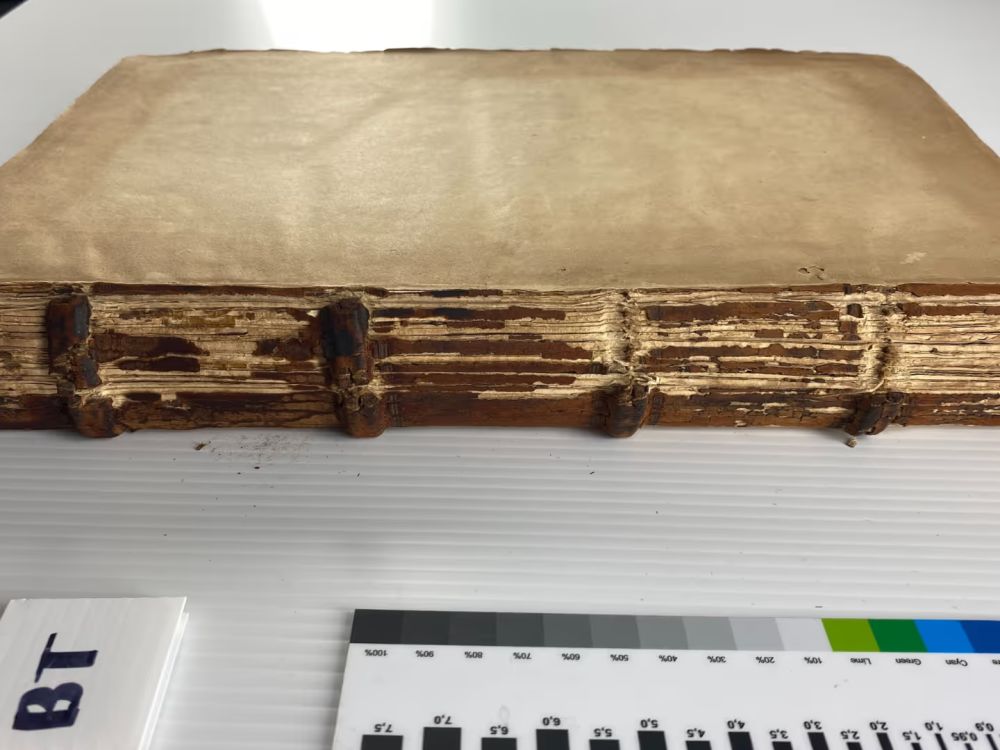
Before treatment

After treatment