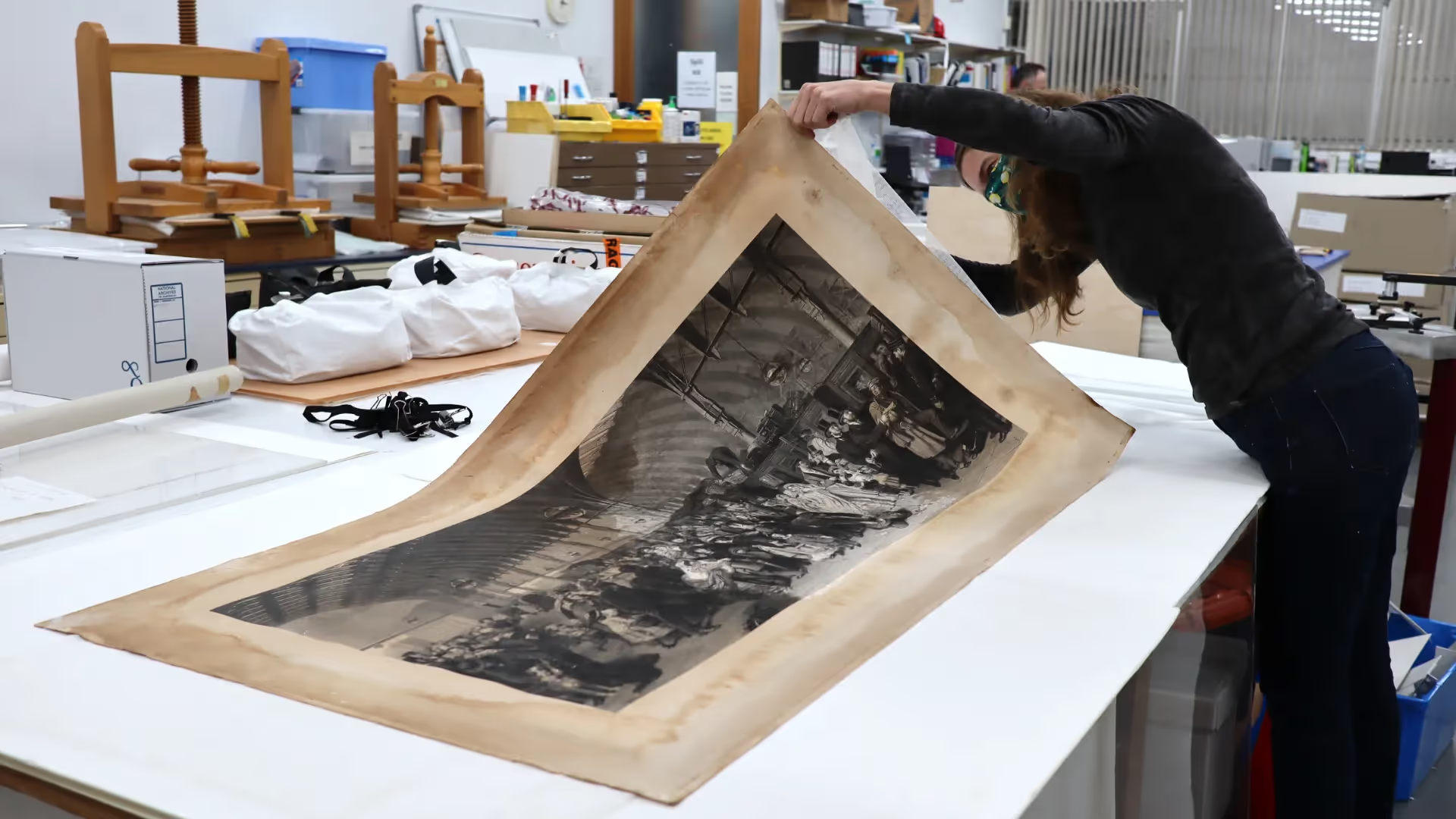
We specialise in navigating the fine art insurance process to ensure the best possible outcomes for both insurance companies and individuals.
Services include
- Disaster response
- Immediate care and stabilisation
- Damage assessment
- Restoration and conservation
- Working with valuers for valuations and loss in value
- Liaising with insurance companies
When precious objects and art are damaged, time is critical. ICS is ready to act immediately on fire, water, mould, pest infestation, vandalism and other disaster-related damage. We respond quickly with expert conservation guidance to address urgent issues and support next steps. Our goal is to help return affected artworks and collections to their pre-damaged condition as soon as possible.
ICS employs the only art conservation insurance claim experts in Australia to help you navigate this niche area of insurance. Our in-house specialists have the breadth of skills necessary for any fine art insurance project.
We also specialise in historic and irreplaceable books, archives and records.
With offices in Sydney, Melbourne, Canberra, Perth and Brisbane, ICS delivers a speedy response to any fine art insurance emergency nationwide.
Who we work with
Our clients are often insurance companies, loss adjusters and disaster recovery companies, many of whom we have worked with for over 30 years. Our long-standing relationships with a range of companies ensures we can expertly navigate the art insurance process and demonstrates their confidence in our ability to deal with many different insurance scenarios.
We also work with private individuals, art galleries and museums to navigate the fine art insurance process during what can be an emotive time, as valued pieces of artwork undergo salvage and conservation. Our familiarity with the process comes to the fore when you need guidance.
The Insurance claims process
What happens when a claim is submitted?
- Each event requires a different approach, according to the type of damage, the location, and the urgency of the recovery. A claim will typically go through a number of stages, depending on the client and the emergency.
- To support the assessment process, we request information about the insurance contact person/s, the claim number, what happened, and any site-specific information that can be helpful in responding to the claim. These details assist our team to determine the best approach to managing the loss.
Assess the damage
- To begin the conservation process, artworks must be examined and assessed in person onsite or at ICS labs.
- ICS will often be invited to a site visit by the client (usually the insured, insurer, loss adjuster or disaster recovery company) to document the type and extent of damage. We gather information and make recommendations for artworks of all media and scale, even in the most challenging conditions.
- After the initial site assessment, a more detailed assessment is carried out at our labs.
Transport and storage after an event
- The ICS team works in tandem with professional art handlers, who are equipped with customised art transportation vehicles to ensure your pieces are removed safely to our labs.
- For larger collections, we arrange transport by our partner organisations who are trained to manage large-volume claims with speed and precision. Items may be stored at either ICS or designated external storage while awaiting assessment and approval for further action.
- Where necessary, eg. to halt mould growth, we can arrange climate-controlled trucks and cool storage.
- For small collections, the ICS team will often transport items directly to ICS labs for processing.
- For long-distance shipments, our trusted partners will package and deliver items following ICS handling and safety guidelines.
Inventory and examination
- When artworks arrive at ICS, each piece is registered to ensure accurate documentation and handling. Items are inventoried, assigned unique tracking numbers and photographed to record their condition. These images support conservation assessment and treatment planning.
- After documentation, artworks are examined in our conservation labs to identify damage, material vulnerabilities and prior treatments. A condition report and formal treatment proposal is then produced.
Condition report and treatment proposal
- ICS produces a detailed condition report for each artwork, identifying incident-related damage and a formal treatment proposal. These documents outline the recommended conservation methods, materials, estimated timeline, and itemised pricing.
- The assessment process takes approximately 10 business days. Large collections often require additional time, and we keep you informed along the way.
Approval and treatment
- Our team is available to answer questions about treatment options, coordinate approvals, and help with urgent cases requiring emergency care or on-sitework. Appointments to meet with conservators and review your collection at ICS labs are available upon request.
- Work commences after we receive client approval and any required initial payments.
- Our Client Services Manager will provide an estimated completion date based on the size of the collection, type of artworks and extent of damage.
- Clients may choose to discard unapproved pieces, or alternatively request untreated works to be returned to the owner.
Completion and return
- When conservation of the insured work is complete, artworks can be returned by courier after final payment. We recommend opening and inspecting shipments within 7 days of receipt to ensure your satisfaction with the completed conservation work.
- Clients may also visit our labs to inspect and/or collect items.
- Storage quotes can be provided for items going into long-term storage.
Common types of damage
Acting quickly after a disaster is essential. Our conservators can advise on the best response for each circumstance.
Water
- When works are exposed to water or high humidity, conservators carefully examine them for signs of mould, staining and tide lines.
- Immediate intervention and triage helps to prevent further damage and deterioration. Prompt conservation treatment stabilises affected pieces and reduces the long-term risks associated with moisture exposure.
Fire
- Fire-damaged artworks often face both structural and aesthetic issues. Challenges range from acidic soot, lingering smoke odours, to water damage caused by firefighting efforts.
- Treatment focuses on stabilisation, removing harmful residues and odours, and preventing further degradation.
Impact and accident
- Artworks can be vulnerable to impact and handling damage during moving, shipping, or during everyday care. Structural issues, surface abrasions, and punctures or tears are common, especially when glass is broken.
- Our conservators deal with a wide range of claims relating to impact and handling damage.

Who we work with

Related projects

.avif)



Talk to us
Passionate about conserving art and cultural heritage
Our expert team would love to help you find solutions to your conservation and heritage needs. Get in touch today.