Condition
- The painting was in poor structural condition, with built-up of surface dirt, discoloured varnish and uneven gloss obscuring the original appearance.
- The canvas had suffered extensive damage overtime, including several tears, a puncture hole and areas of paint loss. The canvas had become distorted from buckling and shrinkage, which caused instability across the surface.
- Previous repairs and retouching had become visually noticeable as the restored areas no longer matched the surrounding paint.
- On the reverse, the canvas showed signs of heavy dirt, water staining and earlier repairs.
- The timber frame showed signs of age and wear, with accumulated dirt, abrasions, open corner joints and minor structural damage.
Treatment
Conservation treatment was carried out in two stages: stabilisation, followed by structural and aesthetic improvements.
Stage 1 – Stabilisation
- The artwork was thoroughly documented using visible, ultraviolet and infrared photography before treatment began.
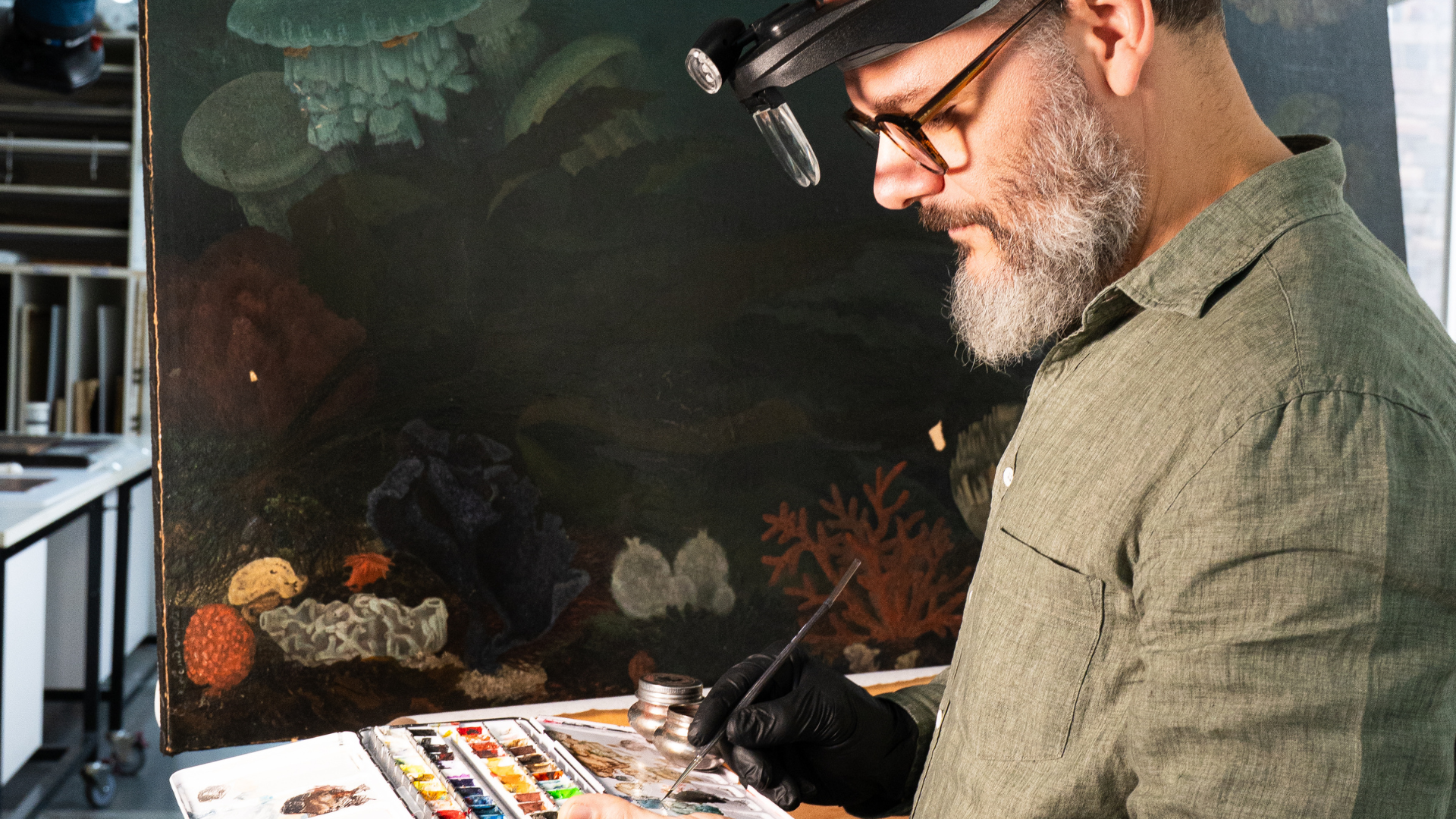
- After frame removal and careful examination under magnification, surface dirt was removed from the front and back of the canvas.
- Fragile paint was consolidated to prevent further loss, and tears and cracks were stabilised.
- Previous repairs and patches that were no longer performing effectively were removed.
- A new custom-made cedar stretcher was prepared to replace the original support.
Stage 2 – Structural and Aesthetic Treatment
- The painting was removed from its original strainer and carefully flattened to reduce distortions in the canvas.
- A new lining fabric was applied to strengthen the weakened support, then the artwork was re-stretched onto its new cedar stretcher.
- Discoloured varnish and mismatched previous retouching were removed to reveal the original paint surface.
- Areas of paint loss were filled and carefully retouched to reintegrate damaged areas, before new protective varnish layers were applied.
- Finally, the painting was housed in acustom-made frame, designed specifically to complement the artwork, fitted witha conservation-grade backing board for long-term protection, and prepared forsafe transport and return.
Outcome
Australian Museum were thrilled with the restoration and are looking forward to exhibiting the painting in 2027 for the Australian Museums 200th celebrations.
In the news
- https://australian.museum/learn/collections/museum-archives-library/museum-archives/medusae-of-the-australian-seas-1887

Before treatment

After treatment


.avif)