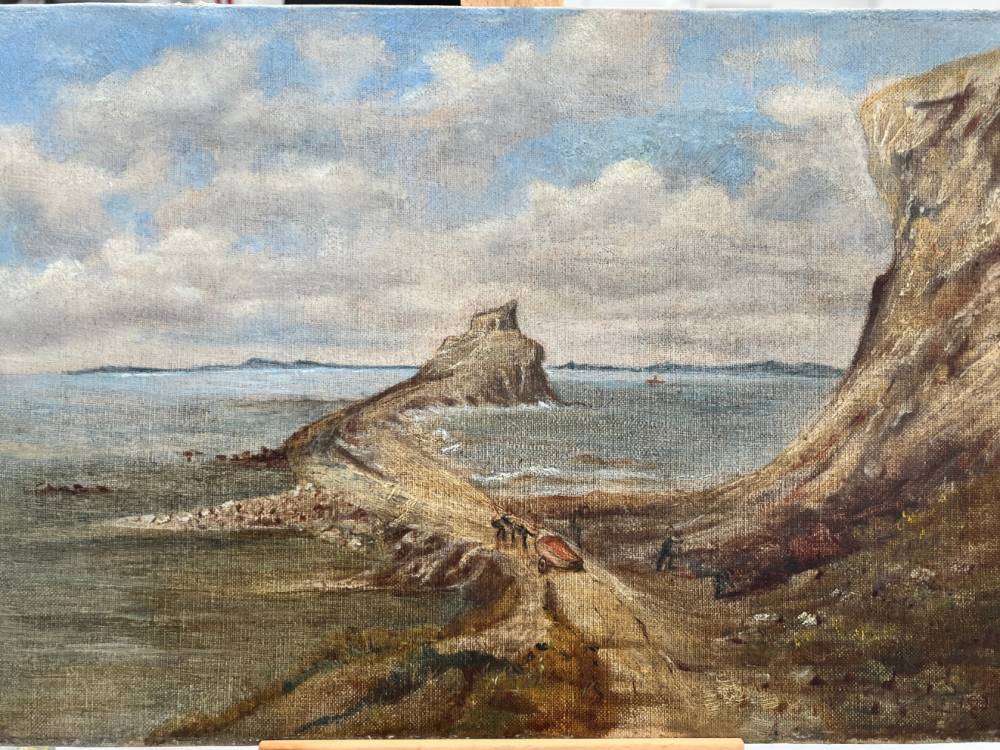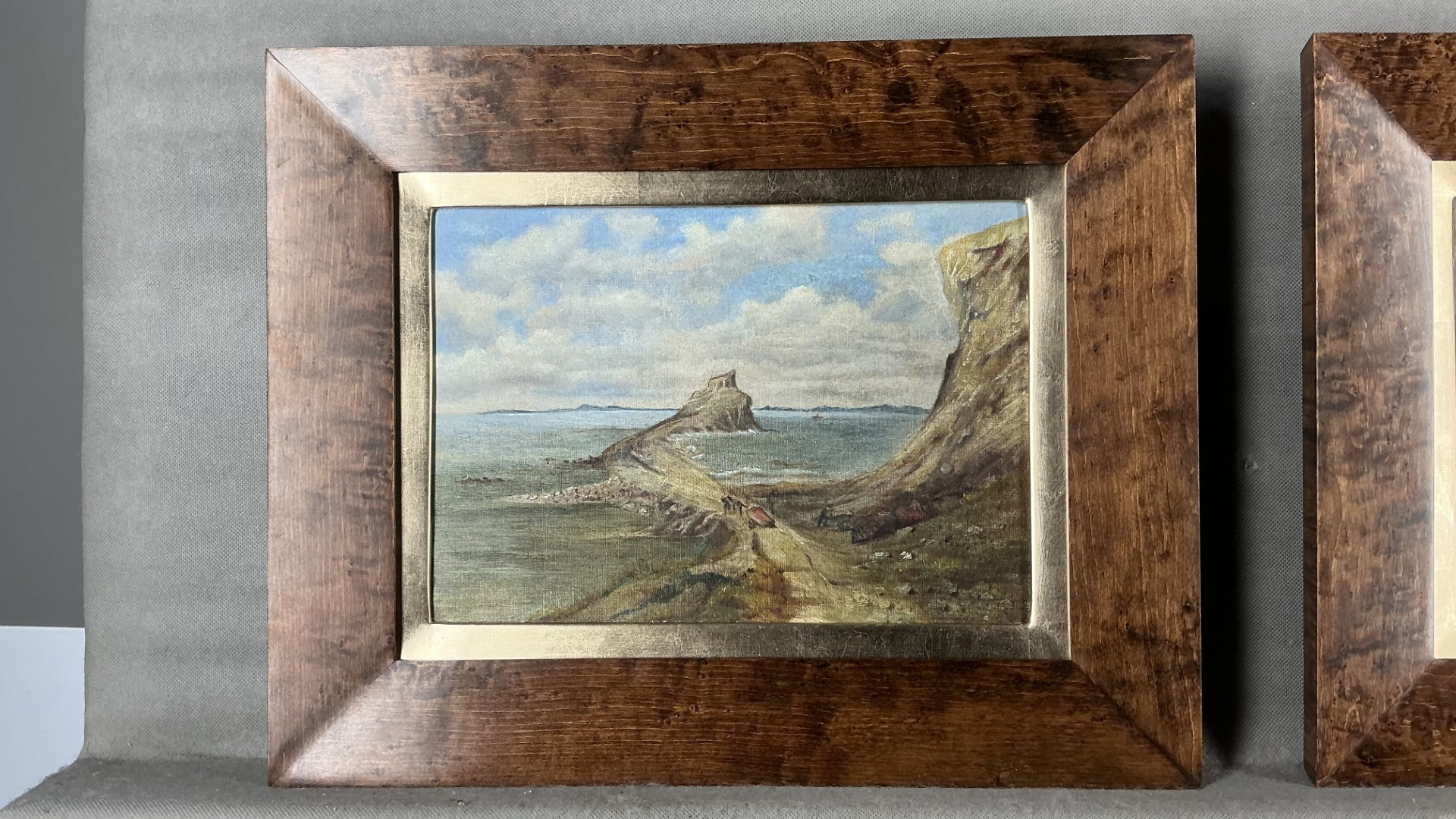
Nobby's (1), 1845 by Frederick Flockton

Overview

This 1845 artwork by Frederick Flockton was selected as a case study to illustrate thread by thread repair

In 2024 the Newcastle Art Gallery moved its collection to storage facilities in Sydney and Melbourne. The collection of over 7000 artworks were assessed for conservation and this 1845 artwork Nobby’s (1 )by Frederick Flockton was selected as a case study for our Senior Paintings Conservator Eden Christian to work on as part of the Fusion 2: Asia-Pacific workshop run by the Getty Museum in Los Angeles in collaboration with the Art Gallery of New South Wales.

At the workshop, conservators were taught an innovative technique in tear repair called single-thread bonding. Single thread bonding is when individual threads in a tear are repaired and adhered, and replacement threads are added if they have been lost.  The threads must be stabilised and then rewoven so that the canvas structure is recreated. This ensures that tension and stability is reintroduced to the painting.

Single-thread bonding is undertaken under a microscope because it is importantto be able to see each individual thread. Using a heated microneedle, the glue on each thread is treated and dried, allowing the  conservator to move forward in an orderly fashion.

‍

Year

2025

Client

Newcastle Art Gallery

Services

  • Thread-by-thread repair

Awards

Condition

  • The artwork was in very poor condition
  • Three major tears had caused paint loss
  • There was significant surface dirt and dust
  • The varnish was discoloured
  • Three previous tear repairs had madethe canvas unstable
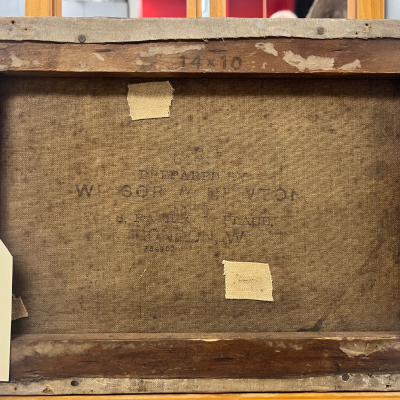
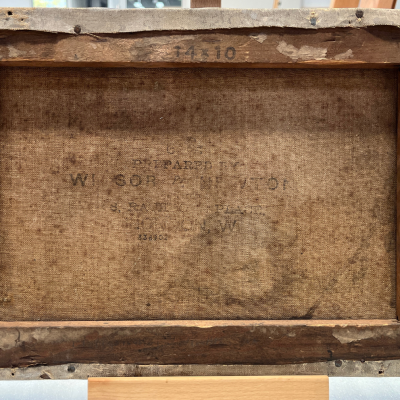
  • There watermarks on the verso (back)

Treatment

Before beginning the tear repair, the painting was brush vacuumed.  Further gentle cleaning was undertaken using a smoke sponge to pick up ingrained dirt. An aqueous solution was used in the final stage of cleaning to remove any remaining dirt and help bring back the original colours.  After cleaning, the following treatment steps were undertaken:

  • Failing patch repairs on each tear were removed, along with any residual adhesives.
  • Unstable areas were consolidated.
  • Tears were realigned using the thread-by-thread method, and deformations across the artwork were humidified and flattened.
  • Discoloured varnish was removed and a new conservation varnish layer added to create a barrier between the original artwork and the conservation treatment.
  • Losses to the paint were then filled and in-painted
  • A final layer of varnish was applied to brighten the overall appearance of the painting as it originally would have appeared.

‍

Treatment outcomes

The reframed painting is now proudly back on display at the recently renovated Newcastle Art Gallery, it’s vibrant colours restored and the repairs almost invisible.

In the news

  • Newcastle Art Gallery International Conservation Project video: https://newcastleartgallery.nsw.gov.au/videos/international-conservation-project

‍

Before treatment

After treatment
Testimonial

Close-up of two orange terracotta figurines with white decorative patterns, one facing forward and the other in profile.

Get in touch

Passionate about conserving art and cultural heritage

Our expert team would love to help you find solutions to your conservation and heritage needs. Get in touch today.