.png)
.avif)
The importance of protecting artworks from mould
Mould is one of the most common threats to artworks and cultural collections. It can cause irreversible damage to artworks. However, good environmental management and early intervention can significantly reduce the risk.
Mould can develop quickly when materials are exposed to excessive humidity, poor air circulation or damp conditions, and once established it can cause permanent staining, surface damage and deterioration.
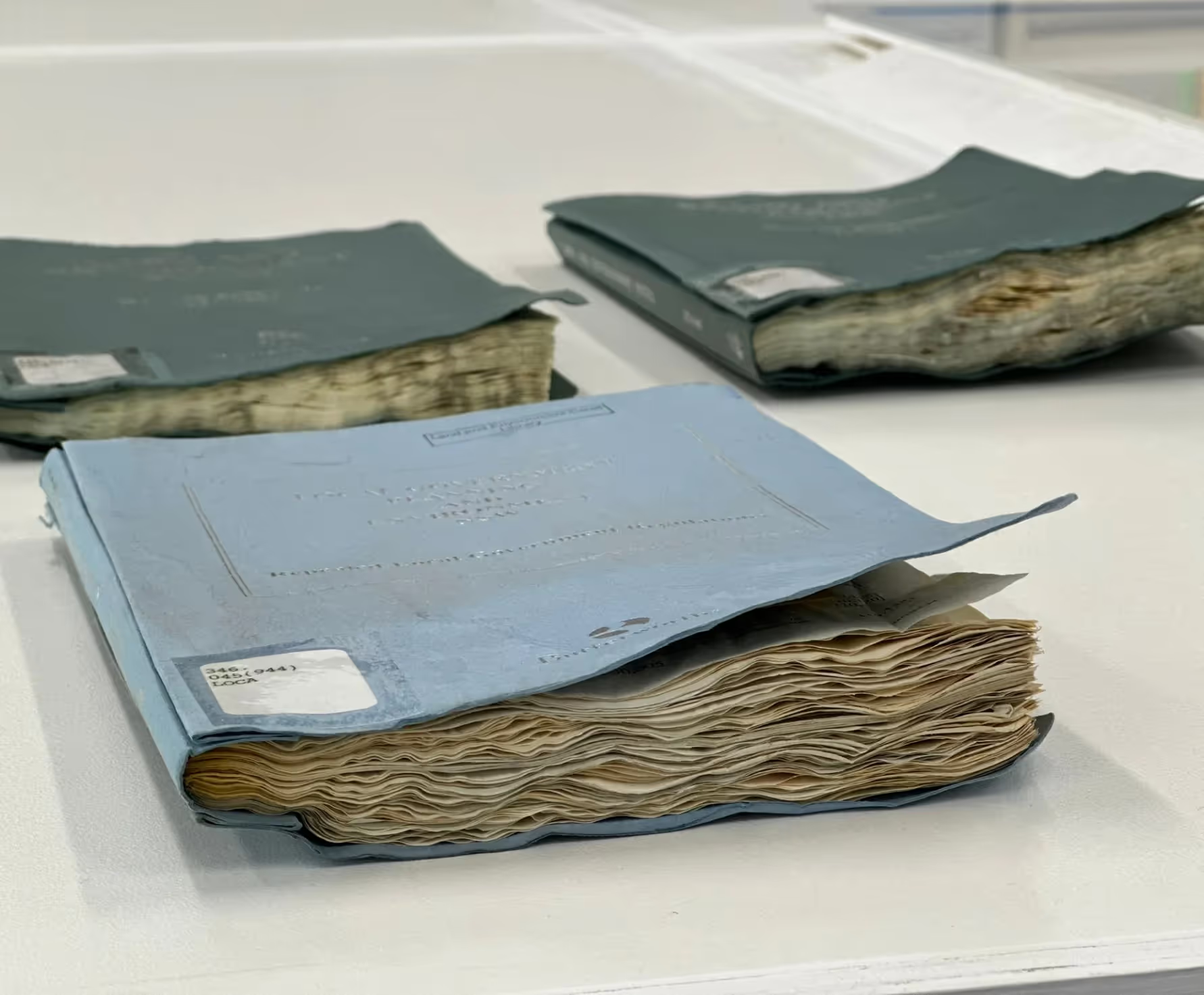
Paper-based collections are particularly vulnerable. Books, photographs, letters, prints, drawings and archival materials can all provide an ideal food source for mould.
Paintings, textiles, leather, wood and other susceptible materialscan also be affected.
Why is mould damaging to artworks?
Mould is a living organism that feeds on organic materials. As it grows, it produces enzymes and acids that can break down the materials on which it is growing.
On paper, this can result in staining, weakening, and loss of fibres. Photographs and other coated materials can be particularly sensitive to mould growth, with damage to image surfaces and emulsions possible.
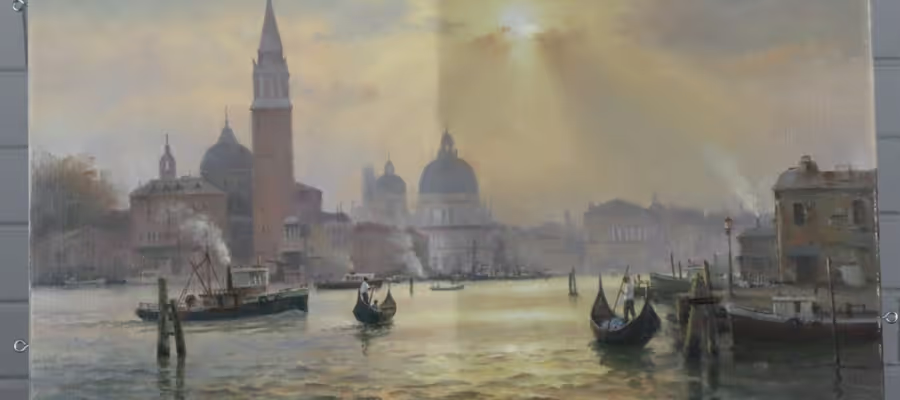
Paintings may develop staining, discolouration and surface disruption. Mould can grow on canvas, wooden components and the layers of a painting, particularly when the surrounding environment remains damp.
Other sensitive collection materials, including textiles, leather, parchment, wood and some composite objects, can similarly be affected.
Importantly, mould damage does not always disappear when the mould itself is removed. Staining and structural deterioration can remain, which is why early intervention is important.
What causes mould to grow?
Moisture is one of the most important factors in mould growth. A humid environment, water leak, flood or condensation can create the conditions mould needs to develop.
Relative humidity (RH) measures the amount of moisture in the air relative to how much moisture the air can hold at a particular temperature. As temperature changes, so does RH. This is one reason that the environment around an artwork needs to be considered as a whole rather than relying on a single humidity reading.
Poor air circulation can make the problem worse. Enclosed storage areas, tightly packed shelving and areas against damp walls can create localised pockets of high humidity.
Mould can also become an issue after an artwork or collection has been exposed to water. Even if materials appear dry on the surface, moisture can remain within paper, canvas, boards and other porous and organic materials.
Why does humidity matter?
Humidity affects artworks in more than one way. Many organic materials, including paper, canvas, wood and leather, are hygroscopic – they naturally absorb and release moisture from the surrounding air.
When relative humidity changes significantly, these materials expand and contract. Over time, this movement can contribute to paper buckling, cracking in wooden objects, and flaking or lifting paint.
High humidity also creates favourable conditions for mould growth.
How can mould be prevented?
The best way to manage mould is to prevent the conditions that allow it to grow.
Keeping environmental conditions reasonably stable, and below 60% to 65% RH, helps protect collections from both mould and moisture-related damage.
For most homes and collection spaces, the practical aim is to keep temperature and relative humidity reasonably stable (avoid excessive moisture and large, rapid fluctuations). Always ensure there is adequate air circulation and keep artworks and archival materials away from known sources of moisture, including leaking pipes, damp walls and areas prone to condensation.
Framed and glazed works can benefit from a well-sealed backing, which helps buffer the artwork from rapid changes in the surrounding environment.
Furniture, artworks and other moisture-sensitive objects are better placed in the more stable parts of a building, away from exterior walls, bathrooms and other areas where humidity can fluctuate.
Regularly checking storage areas and artworks can help identify problems early. Look for unusual spots or discolouration, musty odours, changes to the surface of an artwork, or evidence of dampness.
Good housekeeping is also important. Dust and dirt can provide additional nutrients for mould, while crowded storage can restrict airflow and make inspection more difficult.
For paper collections in particular, maintaining a reasonably stable, dry environment and inspecting materials regularly can make a substantial difference. The same principles apply to paintings, textiles, leather, wood and other susceptible collection materials.
What should you do if you find mould?
Where mould is present, the priority is to control the environmental conditions, prevent the spread of contamination and determine an appropriate treatment for the affected material.
If mould is discovered on an artwork or collection, avoid disturbing it unnecessarily. Brushing, wiping or moving heavily affected materials can spread spores to other objects and throughout the surrounding environment. Seek advice from a conservator about the best approach to your situation.
The general steps for addressing mould are to:
· Carefully separate affected items from unaffected collections where possible and wrap them in plastic for removal to a suitable cleaning space.
· Seek and address the source of the moisture to ensure the remaining items are not affected. Items returned to the same uncorrected environment have a high likelihood of becoming reinfected.
· It may be possible to clean mould from relatively non-porous objects using soft brushes, a HEPA vacuum and microfibre cloths.
· Always seek advice from a conservator about how to handle porous and moisture-sensitive artworks and objects.
· For valuable, historic or particularly fragile objects, professional conservation advice should be sought at the earliest stage possible.
· Book an appointment to bring your wrapped artwork or object to ICS for assessment, triage and treatment.
Conservator steps
The first step for a conservator is mould remediation using specialist equipment. Mould remediation removes the worst of the mould so the item can be safely handled and assessed.
After mould remediation is completed, ICS can provide an estimate for further conservation treatment if required, eg. stain reduction, stabilisation, repairs. If your goal is to simply have the surface cleaned, you may choose to have no further treatment.
The appropriate treatment will depend on the material, the extent of the mould growth, and the condition of the object. Paper, paintings and other sensitive materials often require carefully controlled cleaning methods to avoid causing further damage.
Share
.png)